

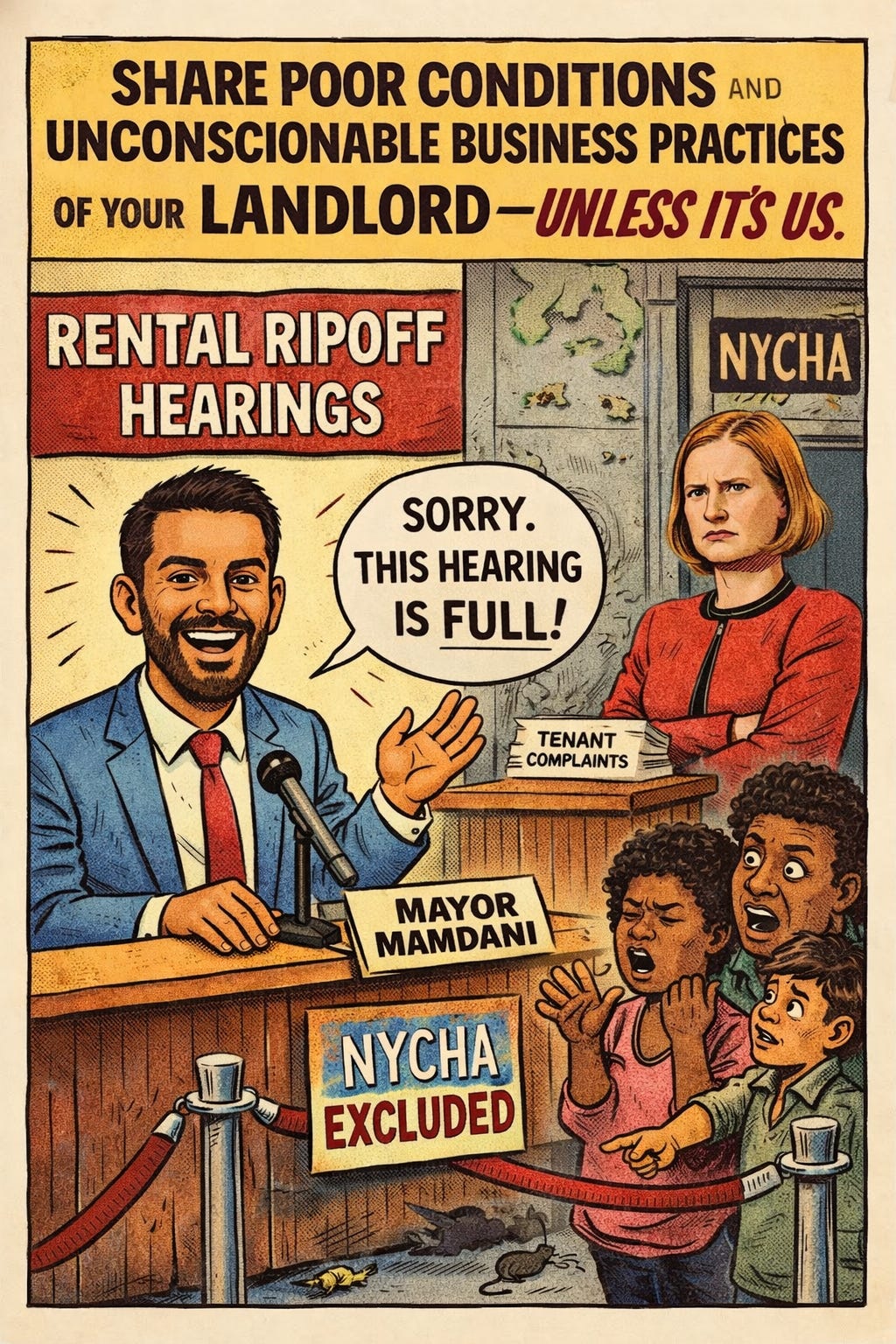
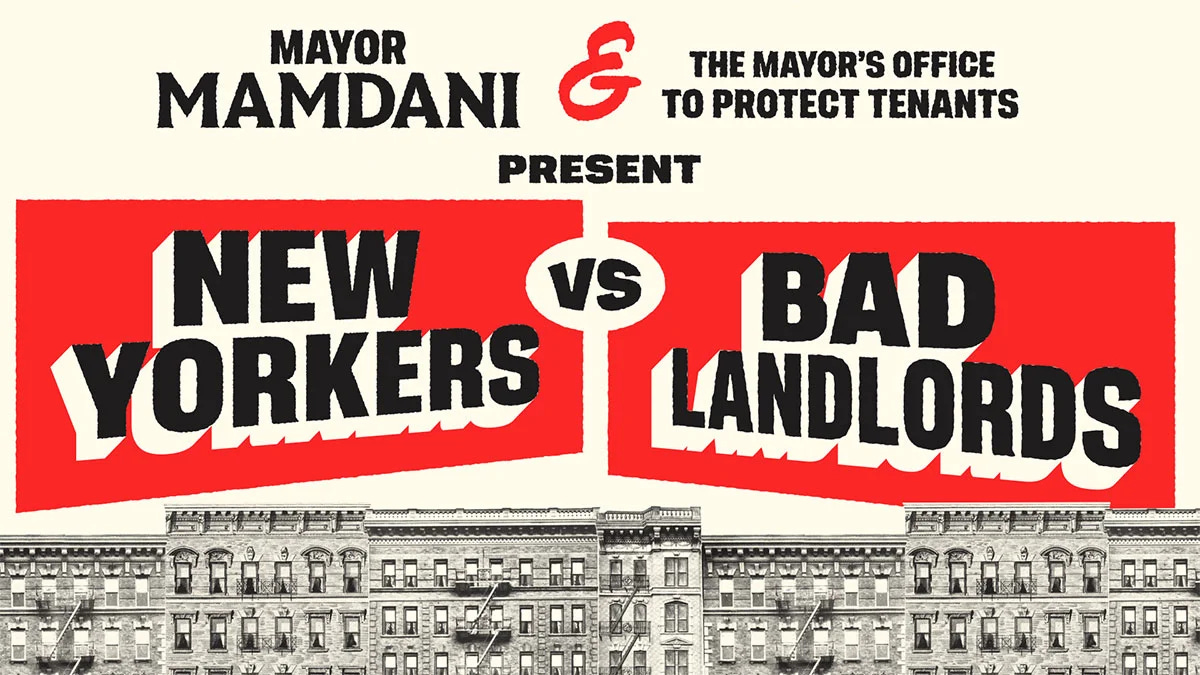
In Mayor Mamdani’s quest to collect the infinity stones of egalitarianism, his “Rental Ripoff Hearings” draw the most obvious contradiction in terms. It’s charmingly marketed as a throwback prize fight between his obscurely named “The Mayor’s Office to Protect Tenants” and nebulously identified “Bad Landlords.” However, the pugilistics leave out one critical party: himself.
As mayor, Zohran is responsible for NYCHA (New York City Housing Authority), which is the federally funded public housing system that manages over 2,400 buildings across the five boroughs. As of July 2024, NYCHA had 610,000 open work orders and estimated capital needs of roughly $80 billion, according to the New York City Comptroller.
Repair times have ballooned from roughly 370 days last year to more than 400 days today, according to CBS News.
For mold complaints, a seemingly ubiquitous concern for hypochondriacs like myself, the average time according to THE CITY to complete a mold work order is 266 days—against a legally agreed target of 7 to 15 days.
And in 2022 and 2023, City Limits reported 85 percent of NYCHA developments failed their federal housing inspections, with “life-threatening” health and safety issues identified in nearly every development HUD inspected.
Still, the Mayor has decided to stage these histrionic tribunals targeting private landlords while presiding over one of the largest dysfunctional landlords in America.
Why?
On its face, calling out lazy, corrupt, ineffectual and or predatory landlords would be a noble enough cause. However, we have to look at Zohran’s proposals as a system of Democratic Socialist ideologies. Which is fine—if they work. However, creating the legal and optical pretext of highlighting “bad landlords”—while ignoring his own—under the shadow of the proposed COPA bill suggests a concerning battle strategy: Make it hard to own shit in New York City.
Which, sure, breaking up Blackstone and private equity firms who control large portions of the city’s rent-stabilized rentals receives no argument from me—but let’s walk it through. These entities have deep pockets and deeper connections. Whatever punitive measures the Mamdani administration attempts to enforce will be paid, delayed or outright dismissed through the court system. However, the majority of minority property owners in the city do not have the same resources to navigate this prosecution. Which raises an uncomfortable question—is this collateral damage by design?
Looking to Mamdani’s Tenant Czar and architect of his housing policy, Cea Weaver, who tweeted in 2018…
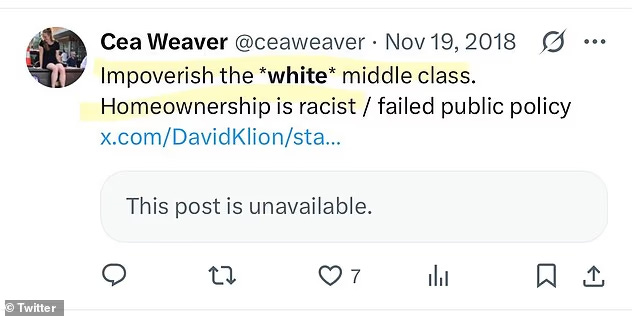
…might give us cause to think so. While she has since called some of her posts “regretful”—without specifying which ones—Mamdani was aware and appointed her anyway.
So like many ideologies of Democratic Socialism, this one ignores the impact and righteous ambition of minorities who want wealth and capital. The enforcers of these limousine liberalism policies often view themselves as “saviors,” removing the “burden” of homeownership from minorities who “shouldn’t” want to embrace the “evils” of generational wealth. Yet the 22,000 black residents who left Bed-Stuy between 2010 and 2020 and 11,000 leaving Harlem between 2010 and 2020 paint a different picture. These black residents didn’t all move to the outskirts of New York City and beyond for a better view. They were priced out, victims of deed-theft and the scourge of income-inequality: All problems this mayor and his Super Friends are well-suited to tackle yet seem to be afraid of engaging conversations on. Gentrification is the Gun Control of progressives—they dare not utter its name.
So instead of embarking upon this Emerson College sociology 101 homework assignment of performatively indicting the concept of capitalism, why not enable people to build and generate wealth? Create better SBA loan programs, tax breaks and incentives for minority and low-income individuals to claim our own destiny—rather than wait for another government program to fail us? If Zohran truly wants to confront negligent landlords, he might do well to look at the landlord in the mirror—without the cameras present.
agreed on all points but ask about how we define "destiny" for any Americans, be they minority or not. That is, let's change the American Dream to something better, more manageable, more sustainable. The biggest joke is on those who strive, push, work, throw their whole lives into "making it" only to find that they are now living in a cold, white world full of deadlines, less sleep, more pressure, less joy.